
Which revision and SDK?
Pin the protocol revision and compatible SDK before implementing examples or migration work.
Corporate AI training · Onsite & live online
Based in Bengaluru · delivering across India
Live-online protocol training · Technovids Bengaluru
Learn how MCP clients and servers expose context and actions—and how identity, authorisation, validation and human approval determine whether an integration is safe to use.
MCP Training in Bangalore is developer-focused training on the Model Context Protocol from Technovids, headquartered in HSR Layout, Bengaluru. It covers current protocol architecture, clients and servers, tools and resources, capability discovery, transport and version decisions, authorisation, testing and operational controls. Because MCP evolves, the lab pins a confirmed specification revision and SDK rather than relying on old examples. Public classes run live online when a cohort is scheduled; private corporate delivery is available by agreement.
Updated
Scope boundary: Training does not approve a public or production MCP server, provide credentials, or certify an integration as secure. The selected revision, SDK, lab access and hands-on scope are confirmed before delivery.
The protocol standardises interaction; the application and organisation still own trust, identity, authorisation and safe execution.
Pin the protocol revision and compatible SDK before implementing examples or migration work.
Separate context the application may read from operations that can produce side effects.
Trace user, client, server and downstream-service identity instead of treating connection as permission.
Place validation and meaningful approval before costly, sensitive, irreversible or external actions.
Labs use safe local or approved services; production credentials and confidential systems stay outside the classroom by default.
Expose a small capability set using the confirmed SDK and protocol revision.
Return controlled contextual information with predictable identifiers and content types.
Implement a bounded operation with structured arguments and output.
Connect a compatible host or practice client to the server.
Trace the actors and credentials across client, server and downstream service.
Exercise incompatible versions, unavailable tools, timeouts and rejected actions.
MCP is one integration layer inside an AI application, not a complete application architecture.
This page
Learn current architecture, implementation and security decisions through a bounded integration.
Best for: Developers and platform teams evaluating MCP now
Use MCP as one optional extension inside a reviewed AI-assisted development workflow.
Best for: Developers adopting Claude Code
Use tools and integrations inside controlled stateful agent workflows.
Best for: Developers building tool-using agents
Connect MCP with RAG, agents, APIs, deployment and operations.
Best for: Developers needing the complete application stack
Both require access control, but an action needs additional validation, authority and recovery design.
| Decision point | Resource or context exposure | Tool or action exposure |
|---|---|---|
| Purpose | Provide controlled information to the application | Request an operation through the server |
| Primary review | Data access, scope, sensitivity and size | Identity, arguments, side effects, approval and rollback |
| Typical failure | Excessive or unauthorised context exposure | Unauthorised, invalid or irreversible action |
| Human control | Visibility and source review where appropriate | Confirmation before material or sensitive actions |
The outcome is a version-aware, bounded integration—not a claim that every MCP server is safe.
Explain the client, host, server, capability and downstream-service boundaries.
Expose a controlled resource or tool with validation and predictable errors.
Show which actor authorises each data access and action.
Check compatibility, failure, authorisation and unsafe action cases.
The route is confirmed before delivery so participants practise at the right technical level and do not confuse a tutorial demo with production readiness.
Confirm whether the need is a public learning route, a private team workshop or a broader engineering programme.
Agree programming level, accounts, model access, practice data, repository and any security restrictions.
Dates, duration, topics, exercises, delivery mode, fees and inclusions are stated before booking.
Short explanations lead into implementation, evaluation, debugging and instructor feedback.
Participants leave with reviewed artefacts, known limitations and a route for further practice or implementation.
The confirmed lab stack and duration determine which artefacts are implemented.
Client, server, data, tools, identities, credentials and downstream services.
A bounded resource or tool implemented with the confirmed SDK and revision.
Provenance, access, scopes, validation, confirmation, logging and errors.
Revision, capability, authorisation and failure scenarios.
The practical work keeps access, evaluation, failure handling and human authority visible.
Labs use authorised model access, safe documents and practice integrations; credentials and private data never belong in prompts or source control.
A successful demo is tested against expected, difficult and failure cases before anyone calls it reliable.
Permissions, validation, timeouts, budgets and approval gates limit what an agent or integration may do.
A qualified person reviews sources, outputs, tool calls and material actions before release or use.
Reviewed on 21 September 2026. The delivery rechecks the final specification and SDK documentation because protocol and package behaviour can change.
Real instructor-led sessions from the Technovids delivery archive. The photographs show delivery context; they do not imply a result for a future cohort.


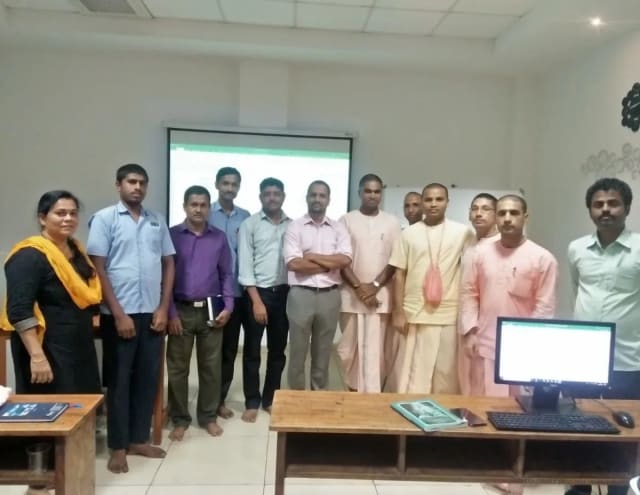
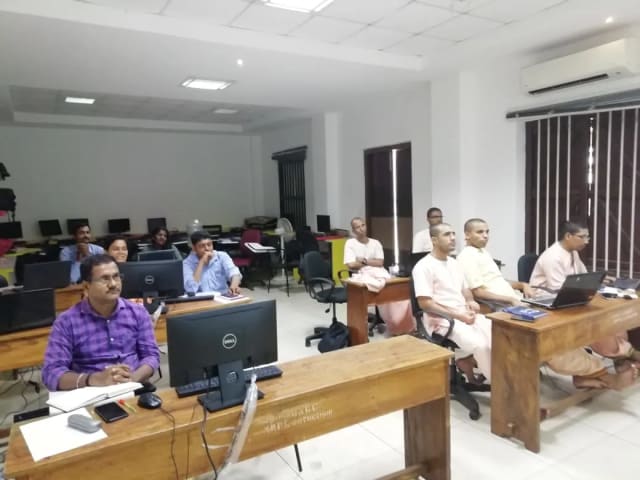


Technovids assigns a suitable trainer after the audience, subject depth and delivery needs are confirmed.
Co-founder & Lead Instructor, Technovids Consulting
Pankaj is a co-founder and the lead instructor at Technovids Consulting. His programme work spans practical AI adoption, AI engineering, evaluation, responsible production AI, data analytics and corporate learning design, with an emphasis on hands-on exercises connected to workplace tasks.
Expertise:
AI & Machine Learning Trainer, Strategist and Consultant
Junaid is an AI and machine-learning trainer, strategist and consultant with more than 22 years of training experience. His work combines enterprise AI education, business-centred adoption, responsible AI practices and applied solution design, helping professional audiences connect AI concepts to real organisational needs.
M.E. in Computer Engineering, specialising in Artificial Intelligence · author of programming books on Python, Java and C++
Expertise:
Technical Trainer & Curriculum Architect
Pradeep is a technical trainer and curriculum architect with more than 20 years of experience across enterprise technology, cloud infrastructure and advanced AI systems. He designs practitioner-focused programmes, labs and assessments covering AI, LLM systems, Python and machine learning, translating complex technical subjects into structured learning experiences.
Bachelor of Engineering in Electrical Engineering · instructor-led, virtual and blended delivery
Expertise:
The proposal names or confirms the trainer assignment for the engagement; every trainer shown here does not teach every programme.
Updated
Approved feedback and delivery photographs show wider Technovids training experience. They are not presented as guaranteed outcomes from this specific course.




















Practical training programmes delivered for learners, professionals and teams across AI, data, cloud, productivity and professional skills.
What professionals found useful, practical and relevant to their day-to-day work.
The AI training from Technovids helped me gain a better understanding of Generative AI, prompt engineering, and practical AI use cases for software development. The course was clear, interactive, and focused on real-world applications. It gave me confidence to explore AI tools more effectively in my work.
Technovids conducted the AI training in a very effective and engaging manner. The sessions were practical, easy to follow, and focused on how AI can be used in real software engineering and business workflows. It was a valuable program for understanding the current direction of AI adoption in the industry.
The AI training delivered by Technovids was practical, structured, and relevant for software professionals. The sessions connected AI concepts with real industry use cases, making it easier to understand how AI can be applied in development, automation, and productivity improvement. It was a valuable learning experience.
I had been trying to transition from traditional backend development to Generative AI, but self-learning was getting overwhelming. The AI Engineering course at Technovids gave me the exact structured roadmap I needed. The modules on LLM architectures and practical prompt engineering are brilliant. It’s not just theory; you actually build functional AI applications. Highly recommend this for working professionals looking to upgrade their tech stack.
What I loved most about the Technovids GenAI program is how up-to-date the curriculum is. Instead of outdated practices, we learned to integrate the Model Context Protocol (MCP) and practically apply tools like Claude and Cursor for AI-assisted coding. It felt like I was learning the exact skills that top tech companies are hiring for right now. The pace is perfect, and the support is great.
I was initially intimidated by the math and complexity behind AI, but the trainers at Technovids explain things in such an accessible way. They break down everything from basic prompt engineering to complex integrations without losing you in the jargon. The session recordings and project materials are top-notch. If you are serious about becoming an AI Engineer, Technovids provides the perfect launchpad.
Published answers define the page scope. A written proposal records engagement-specific terms.
The standard MCP training runs 12 hours, delivered live online. A private team version can be shortened or extended, and the written proposal confirms its final duration.
Participants should be comfortable with TypeScript/JavaScript or Python, APIs and basic authentication concepts. The lab language and SDK are confirmed before delivery.
The current official revision is checked before each delivery and pinned in the lab instructions. As reviewed on 21 September 2026, the official 2026-07-28 revision introduced material changes including a stateless protocol core, so older examples should not be assumed current.
It covers threat-aware design, server provenance, identity, authorisation, least privilege, input validation, confirmation, errors and logging at training depth. It does not perform a production penetration test or security approval.
No. HSR Layout is the Technovids head office. When a public cohort is scheduled, classes run live online through Zoom. The Technovids LMS includes notes, assignments, lab instructions, a cohort discussion group, a completion certificate when requirements are met and recordings uploaded within 24 hours with three months of access.
No. Submit an enquiry for the next confirmed delivery option, schedule, lab stack, prerequisites, inclusions and fee.
Only when the organisation authorises the environment, data and credentials and the integration can be prepared safely. A local or synthetic practice service is the default.
2nd Floor, Chandrodaya Complex, 19/19, 24th Main Rd, near Hanuman Temple, Agara Village, 1st Sector, HSR Layout, Bengaluru, Karnataka 560102.
Please contact us before visiting the head office. The HSR Layout address is a head office, not a walk-in public classroom.