Where can AI add real value?
Look at business problems and how work gets done before picking tools. Weigh value, practicality, data and risk together.
Corporate AI training · Onsite & live online
Based in Bengaluru · delivering across India
For senior leaders · Strategy, rules and change
Help your senior leaders make better decisions about where to spend on AI, how to control it and how to roll it out, without turning a leadership session into a tool tutorial.
Corporate AI Leadership Training is a private programme for CXOs, business heads and senior managers. It helps them decide where AI fits, which ideas are worth testing, which risks need controls and how the rollout will be led. It mixes plain explanations of AI with a review of where it could help, choices about rules and oversight, questions to ask vendors and before investing, and a written action plan. The length, examples and outputs are agreed around your leadership team’s decisions in the proposal. It is AI training for CXOs and other senior leaders, and it keeps AI for executives practical: decisions, not tool tutorials.
Updated
Scope boundary: This is a programme for making decisions. It is not a coding course, an endorsement of any product, or a replacement for legal, regulatory, security, procurement or financial advice.
Each module helps with a decision your leaders will own after the session.
Look at business problems and how work gets done before picking tools. Weigh value, practicality, data and risk together.
Compare ideas by the evidence they need, the effort to build them, how much they depend on people changing habits and how easily you could undo them, not by how good the pitch looks.
Leaders set how much risk is acceptable, who is responsible, when to escalate and how often to review. Teams set the detailed controls.
Name sponsors, process owners, managers and champions, and link training, policy, messages and measurement.
The final order depends on how far along your company is and the decisions we agree in the first conversation.
A clear view of generative AI, assistants, automation and AI applications, plus the limits leaders must know.
Best for: Leadership teams that need a shared, current language
Find the processes where AI might help, then compare their value, practicality, data needs and risk.
Best for: Teams choosing pilots or moving budget
Look at data, quality, intellectual property, security and supplier questions at the level leaders decide on.
Best for: Leaders setting guardrails or reviewing providers
Link sponsorship, skills, messages, changes to how work is done and measurement into a rollout plan.
Best for: Companies moving from pilots to everyday use
You may need both, but they answer different questions.
| Decision point | Staff tool training | AI leadership programme |
|---|---|---|
| Main question | How do I do an approved task? | Where, why and with which controls should we use AI? |
| Practice | Prompting, checking and tasks for each role | Decisions on opportunities, spending, rules and change |
| Level | Day-to-day use | Direction for the company and each business unit |
| Output | Practised tasks and job aids | Priorities, owners, assumptions and leadership actions |
Each module builds on the previous one, moving from understanding to analysis to strategy. The programme culminates in participants building their own Executive AI Leadership Action Agenda.
A clear-eyed overview of where AI is today and where it is heading — without hype or technical jargon. Leaders leave this module with a shared vocabulary and a realistic view of what AI can and cannot do for their organisation right now.
A structured process for scanning your value chain, workflows, and customer journeys for genuine AI leverage points. Leaders identify their top-three AI opportunities before this module ends, using a prioritisation framework built for the time constraints of senior leadership.
Leaders cannot make responsible AI decisions without understanding the risk landscape. This module covers the categories of AI risk that matter most to business leaders — legal, reputational, operational, and ethical — and introduces the governance questions every leadership team must answer before scaling any AI initiative.
AI vendor conversations can be disorienting for business leaders. This module gives leaders a structured evaluation toolkit — questions to ask, red flags to spot, and a decision framework for build versus buy versus integrate.
AI investment decisions need to account for evaluation, human review and changing operating costs as well as implementation. This module introduces frameworks for estimating value, scoping investment, and structuring stage-gated commitments that protect organisations from overcommitting to unproven initiatives.
Technology alone does not drive AI adoption — people do. This module addresses the human side of AI transformation: identifying the right internal ownership, designing upskilling programmes, managing resistance, and building the psychological safety that allows experimentation.
Even a technically sound AI initiative can struggle when change management is underfunded or underplanned. This module draws on change management principles and applies them specifically to AI — including the unique dynamics of technology-led change.
The culminating module. Using the frameworks and insights from the seven preceding modules, each participant develops their own Executive AI Leadership Action Agenda — a strategic document that captures their AI priorities, risk positions, team readiness assessment, and clarity on their first initiative. Facilitated peer review ensures the agendas are robust and actionable.
Note on timings: The agenda and module timings are illustrative. Technovids customizes the workshop format, duration and emphasis based on leadership roles, organisational priorities and AI maturity.
The workshop connects the learning to a practical document: an Executive AI Leadership Action Agenda built using the frameworks explored during the session.
The Executive AI Leadership Action Agenda is a structured strategic document that each participant develops during Module 08. It is not a 90-day implementation plan or a project Gantt chart. It is a leadership agenda — a clear articulation of where you stand, what you will prioritise, and what needs to be true for your organisation to capture meaningful value from AI.
It is designed to be used. Leaders take their Action Agenda into board conversations, into team briefings, into budget discussions, and into their own L&D planning. It gives you something concrete to work from rather than a general sense that you should “do something with AI.”
Your top-three AI opportunities for your business unit, evaluated using the value-chain scan from Module 02.
Each opportunity mapped on the AI Opportunity-Risk Matrix, with your risk tolerance and governance considerations documented.
An honest assessment of your team's current AI readiness — skills, culture, and infrastructure — using the readiness scorecard.
Clarity on who is accountable for AI adoption in each function — mapping ownership decisions so that AI initiatives have named leaders, not shared responsibility.
A clear statement of the one AI initiative you will focus on first — with a defined success metric and a scoped starting point.
The governance questions your leadership team must answer before scaling any AI initiative — not a policy template, but the questions that define your governance posture.
Scope clarification: The Executive AI Leadership Action Agenda is a leadership decision document. It is not a detailed technical implementation plan, governance template library, AI champion programme or 90-day deployment roadmap.Use these illustrative industry scenarios to explore the decisions your leadership team faces. They are practice briefs, not reports of named client engagements or measured results.
Risk, customer service and compliance teams each bring AI proposals, but leadership has no shared decision method. Participants map opportunities across the value chain, compare impact and risk, and select priorities for further investigation. The working output is a shortlist with owners, evidence needs, governance questions and a proceed, revise or pause decision.
A COO and plant leaders need to evaluate AI for production planning or quality inspection. They test the proposal against available data, operational constraints and the consequences of errors. The exercise produces vendor questions, a bounded pilot brief, success criteria and an investment case that includes integration and ongoing review costs.
Business units have different starting skills and expectations. L&D and functional leaders map readiness, agree common foundations and choose separate business, leadership and engineering pathways. The output connects training priorities with internal champions, accountable sponsors and a review cadence rather than treating attendance as adoption.
Leaders need enough understanding to distinguish a useful capability from a vendor promise, recognise failure modes, choose appropriate use cases and assign ownership. The key questions concern business value, data readiness, human review, operating costs and how to evaluate a pilot—not how to write model-training code.
Agree a small set of priorities, assess team readiness, define acceptable data use and appoint accountable sponsors. Start with a bounded pilot and a baseline. Give employees role-relevant practice and a way to raise concerns before expanding the programme.
Leadership sets priorities, allocates investment, establishes decision rights and supports organisational change. Technical and operational teams provide implementation evidence. Success depends on their collaboration; executive sponsorship alone does not resolve poor data, unsuitable workflows or inadequate review.
Scan the value chain for repetitive work, information bottlenecks and quality problems. Compare potential impact with data availability, error consequences, implementation effort and the ability to measure improvement. Select a testable problem before selecting a tool.
Tools training builds individual proficiency in products and workflows. Leadership training develops the judgement to select initiatives, fund pilots, define governance and organise adoption. A leadership session can inform a subsequent employee programme; it does not replace hands-on tool practice.
Specify permitted uses and data, require review appropriate to the consequences of an error, and define escalation routes. Identify who owns security, privacy and specialist approval. Revisit the controls when tools or workflows change rather than treating a one-time awareness session as a compliance guarantee.
Combine usage and repeat adoption with quality, task completion time, review effort, business outcomes and operating costs. Record the baseline and measurement period. Evaluate at each investment gate, including failed attempts and rework, rather than extrapolating a single successful demonstration.
Explain the intended changes honestly, invite employees to shape the workflow and listen to concerns about quality, workload and roles. Provide supported practice, recognise useful learning and make it safe to report failures. Internal champions help surface practical problems; they do not replace management accountability.
Translate these decisions into AI Change Management training or a role-based corporate training plan.
The programme works when your next AI decision is better and has a clear owner.
Promising projects are kept apart from low-value or poorly prepared ideas.
Leaders can look at cost, dependencies, take-up, evidence and the downside before committing.
Who decides and where issues go are clear, instead of being left to each user.
The leadership team writes down the next project, its owner, the assumption behind it and the evidence needed.
The same five steps every time keep the training tied to your team’s real work, with the costs and delivery details set out in writing.
Chandan, our corporate L&D expert, asks who the training is for, what they need, any limits on delivery and what should change afterwards.
A Technovids subject expert checks your team’s starting level, tools, examples, risks and the output you want.
It confirms the agenda, format, dates, group size, what is included and excluded, and the price.
Short explanations, demos, practice and feedback, ending with a task from your team’s own work.
Your team keeps the agreed templates and work, and you receive the completion or follow-up details set out in the proposal.
The proposal names the working documents we will produce and who will own them.
Any document that needs analysis of your company, interviews or advisory work beyond the workshop is included only when agreed in the scope.
Decisions, owners, dependencies and next actions from the working session.
Possible AI uses compared on value, practicality, data, risk and the evidence needed.
Gaps in skills, policy, technology, process and sponsorship, made visible.
One clearly limited problem, a named owner, how success will be shown and when to review.
Every programme teaches your people to work within your company’s rules, with a person clearly in charge of the result.
Your team learns what they can type into an AI tool, what must stay out, and when to use an approved workspace or a made-up example.
Facts, sums, sources, tone and the effect on any decision are checked against the original material.
AI can help with a step, but a named person still checks the output and owns the decision or message.
Teams compare quality, effort, risk and take-up on one defined task, instead of claiming general time savings.
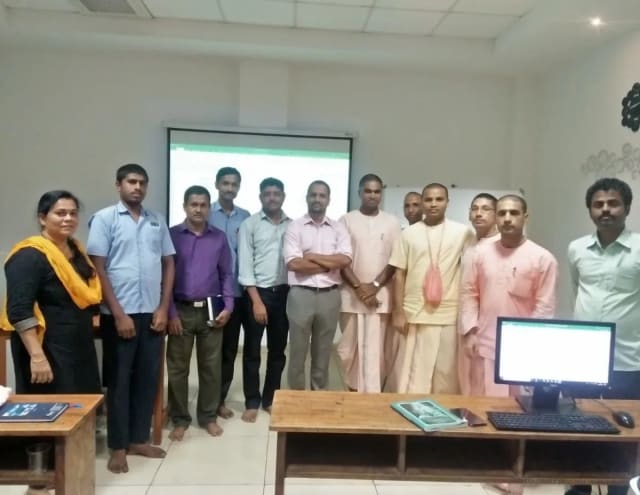
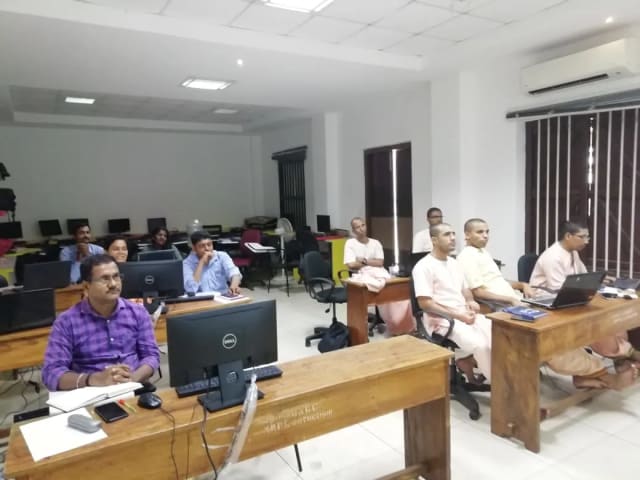
Real photos from Technovids training sessions. They show how we teach, not a promised result for your group.




We choose the trainer once we know who is attending, how deep the subject goes and how it will be delivered.
Co-founder & Lead Instructor, Technovids Consulting
Pankaj is a co-founder and the lead instructor at Technovids Consulting. His programme work spans practical AI adoption, AI engineering, evaluation, responsible production AI, data analytics and corporate learning design, with an emphasis on hands-on exercises connected to workplace tasks.
Expertise:
AI & Machine Learning Trainer, Strategist and Consultant
Junaid is an AI and machine-learning trainer, strategist and consultant with more than 22 years of training experience. His work combines enterprise AI education, business-centred adoption, responsible AI practices and applied solution design, helping professional audiences connect AI concepts to real organisational needs.
M.E. in Computer Engineering, specialising in Artificial Intelligence · author of programming books on Python, Java and C++
Expertise:
Technical Trainer & Curriculum Architect
Pradeep is a technical trainer and curriculum architect with more than 20 years of experience across enterprise technology, cloud infrastructure and advanced AI systems. He designs practitioner-focused programmes, labs and assessments covering AI, LLM systems, Python and machine learning, translating complex technical subjects into structured learning experiences.
Bachelor of Engineering in Electrical Engineering · instructor-led, virtual and blended delivery
Expertise:
Your proposal names the trainer. Not every trainer shown here teaches every programme.
To book a trainer for your team, call +91 86183 46384 or email corporate@technovids.com.
Updated
Clients who agreed to be named, feedback from people we have trained and real photos from our sessions show how Technovids works. They are not a promise of any particular result.



















Hands-on training for people and teams in AI, data, cloud, productivity and workplace skills.
What people we trained found useful in their day-to-day work.
Technovids AI training was very practical and well structured. The sessions helped me understand how AI concepts can be applied in real data engineering and business workflows, instead of only learning theory. The trainer explained the topics clearly with relevant examples, which made the learning experience valuable and easy to follow.
The AI training from Technovids helped me gain a better understanding of Generative AI, prompt engineering, and practical AI use cases for software development. The course was clear, interactive, and focused on real-world applications. It gave me confidence to explore AI tools more effectively in my work.
Technovids delivered the AI training in a very practical and industry-relevant way. As a data engineer, I found the examples and hands-on discussions useful for understanding how AI can improve data workflows, automation, and decision-making. The sessions were well planned and easy to understand.
The AI training program by Technovids was insightful and professionally delivered. It covered important AI concepts in a simple and practical manner, with examples that connected well with data and analytics use cases. The sessions helped me build a stronger foundation in applying AI in real business scenarios.
Technovids conducted the AI training in a very effective and engaging manner. The sessions were practical, easy to follow, and focused on how AI can be used in real software engineering and business workflows. It was a valuable program for understanding the current direction of AI adoption in the industry.
Technovids AI training was a very useful learning experience. The course explained AI concepts in a practical way and showed how developers can use AI tools to improve productivity, problem-solving, and application development. The trainer's approach was simple, clear, and focused on industry use cases.
These answers cover what this page offers. Your written proposal sets out the terms for your own programme.
It is for CXOs, business and department heads, transformation leaders and senior managers who sponsor AI, oversee it or decide what to spend on it.
No. We explain the technology at the depth needed to make decisions. The focus is what AI can do, its limits, where to use it, spending, risk, oversight and rollout, not coding.
We confirm the length and format in the proposal, once we know who is attending, which decisions they face and what they want to produce. It can be a focused leadership session or a longer working programme.
Yes, if you can share them safely. Technovids can use approved examples to structure the discussion on opportunities, risk and ownership, without publishing anything confidential.
It can produce a leadership action plan and inputs to your strategy. A full company strategy usually needs more evidence, work with stakeholders, and technology and risk reviews. That should be planned separately, not assumed from one workshop.
Yes. Decisions from the leadership session can shape a skills plan by role, covering the basics, workplace tools, analytics, rollout or engineering programmes.
2nd Floor, Chandrodaya Complex, 19/19, 24th Main Rd, near Hanuman Temple, Agara Village, 1st Sector, HSR Layout, Bengaluru, Karnataka 560102.
Please contact us before visiting the head office. The HSR Layout address is a head office, not a walk-in public classroom.