
Which roles need chat, code or connected tools?
Map features to tasks and risk rather than treating the Enterprise seat as one identical workflow.
Corporate AI training · Onsite & live online
Based in Bengaluru · delivering across India
Claude adoption · Workflows, connectors and engineering
Build governed Claude use across business and engineering teams, with workspace access, connectors, Claude Code and human review scoped to the roles that actually need them.
Claude Enterprise Training is a private organisational programme for teams adopting Claude across knowledge work and engineering. It can cover Claude chat workflows, projects or shared knowledge, approved workplace connectors, remote MCP integrations, Claude Code, administration awareness, governance and adoption planning. Access differs by Enterprise agreement, role, feature and administrator settings, so Technovids validates the client’s current workspace before finalising exercises.
Updated
Scope boundary: Technovids provides independent training. Claude procurement, billing, workspace configuration, connector approval and product support remain governed by the organisation and Anthropic agreement.
Claude can serve several audiences, but giving every capability to every user is not an adoption strategy.
Map features to tasks and risk rather than treating the Enterprise seat as one identical workflow.
Review administrator enablement, user authentication, source permissions, actions and third-party risk before practice.
Define repository, file, command, tool and MCP permissions plus version-control and review expectations.
Measure suitable task use, review quality, exceptions and outcomes—not token volume or accepted code alone.
The programme selects modules for the enabled plan and audience instead of assuming all thirteen legacy topics belong in every engagement.
Use Claude for drafting, synthesis, analysis and document-heavy tasks with verification.
Best for: Research, operations, finance, HR, marketing and leaders
Use approved workplace connectors or remote MCP integrations while respecting source permissions.
Best for: Teams with authorised Google, Microsoft, Slack, GitHub or custom connections
Adopt Claude Code with repository context, review, testing and managed policy visible.
Best for: Developers, technical leads and platform teams
Understand identity, roles, spend, connector enablement, usage visibility and rollout decisions.
Best for: Owners, admins, IT, security, L&D and AI champions
The enterprise programme adds operating-model decisions to user skill.
| Decision point | General Claude course | Enterprise adoption programme |
|---|---|---|
| Primary outcome | Practical individual workflows | Coordinated business and engineering adoption |
| Audience | Business or technical learners | Users, engineers, champions, admins and leaders |
| Connectors and MCP | Concepts or approved demonstrations | Permissioned organisational workflow and governance decisions |
| Claude Code | Separate technical course when needed | Role-specific pathway with managed-policy awareness |
| Output | Practised tasks | Role map, workflow backlog and adoption controls |
Choose from thirteen modules covering foundational use, governed engineering workflows, department enablement and organisational change. The proposal identifies the selected modules; not every engagement includes all thirteen. Product-specific exercises depend on the organisation’s plan, enabled features and permissions.
Contact Technovids for a customized agenda, delivery format, duration and proposal based on team roles and organizational goals.
Each department has distinct Claude use cases, review requirements and governance considerations. Training is built around the specific tasks and responsibilities of each team.
| Department | Example Tasks | Claude Workflow | Human Review | Governance Consideration |
|---|---|---|---|---|
| HR | Policy and training drafts, onboarding content, interview frameworks | AI-assisted JD generation, policy summaries, onboarding checklists, interview question banks | HR partner review before sharing with employees or candidates | No raw candidate data in prompts; review all AI-generated policy language before approval |
| Marketing | Campaign briefs, content analysis, brand-guideline workflows | AI content drafts, brief templates, brand-aligned repurposing, audience research summaries | Brand and compliance review before external publication | Approved prompt templates; all content reviewed before sharing outside the organization |
| Finance | Commentary drafts, report summaries, analysis support | AI-assisted report narratives, spreadsheet analysis support, financial briefing summaries | Finance manager sign-off before any submission or distribution | No raw confidential financial data in prompts; human verification of all figures |
| Operations | SOP drafts, issue summaries, process documentation | AI-assisted process docs, checklist generation, issue summaries, escalation templates | Operations lead review before publishing or sharing | Structured prompt templates; review before implementing process changes |
| Leadership | Briefings, scenario exploration, decision-preparation support | AI-assisted briefing outlines, scenario analysis, strategic communication drafts | Leader review and independent judgment at every step | AI as thought partner only; human decision primacy on all strategic matters |
| Research | Document synthesis, source comparison, evidence review | Multi-document summarization, structured comparison, literature review support | Researcher verification of all sources and conclusions before use | Source citation required; no unsupported claims in AI-assisted research outputs |
| Product | Requirements, feedback synthesis, product documentation | AI-assisted PRDs, user-feedback synthesis, release notes, internal product docs | Product lead review before sharing with engineering or stakeholders | No unreleased product information in prompts unless workspace-approved |
| Engineering | Repository understanding, tests, debugging, code documentation | Claude Code for codebase navigation, test generation, refactoring, documentation | Engineer review before merging or deploying any AI-generated code | Repository safeguards; permission modes reviewed and approved by engineering lead |
| Analytics | Report interpretation, data-question framing, analysis summaries | AI-assisted narrative generation, chart interpretation, query-writing support | Analyst verification before presenting to stakeholders | Data accuracy verification; appropriate caveats in all AI-assisted outputs |
| IT | Documentation, troubleshooting support, connector and workspace workflows | AI-assisted technical docs, issue summaries, FAQ generation, connector workflow planning | IT lead review before distribution or implementation | Approved connector and workspace workflows; access controls verified by administrator |
Use cases involving sensitive internal data require organizational approval before sharing with any AI tool. Training covers these boundaries explicitly.
Leadership briefing on Claude opportunity mapping, governance expectations and organizational adoption strategy.
Practical Claude Chat fundamentals for all employees — prompting, workplace tasks, document workflows and responsible use.
Focused sessions for HR, marketing, finance, operations, leadership, research, product and IT with function-specific workflows.
Enable team leads and champions to guide colleagues, facilitate use-case workshops and sustain team-level adoption.
Practical Claude Code adoption covering codebase understanding, tests, refactoring, safeguards and human review practices.
Focused session on approved connectors, remote MCP concepts, permission boundaries and safe external context access.
Session for IT and workspace owners covering roles, permissions, feature enablement, connector approval and data-retention awareness.
Facilitated session to identify priority use cases, define workflows, assign ownership and plan governance and review.
Structured multi-phase engagement covering all modules, department tracks, governance and adoption measurement.
Instructor-led sessions via video conferencing for distributed, hybrid or remote teams across India and globally.
Flexible scheduling including weekday, weekend, multi-day or phased delivery based on team availability and roles.
Contact Technovids for a customized agenda, duration and proposal based on your team roles and training goals.
An illustrative 30/60/90-day plan helps connect Claude Enterprise training to workplace adoption. These are planning checkpoints, not a promised implementation schedule; move forward only when the organisation has the access, ownership and evidence it needs.
Keep attendance and tool usage separate from business outcomes. A useful pilot record includes the task, baseline, sample size, measurement period, reviewer and exceptions. Connect the learning plan to leadership decisions and the role-based corporate AI programme.
| Decision | Claude Enterprise track | ChatGPT Enterprise track |
|---|---|---|
| Approved environment | Practice in the organisation’s approved Claude workspace. | Practice in the organisation’s approved ChatGPT workspace. |
| Department adoption | Choose Claude exercises around the team’s documents, analysis and writing tasks. | Choose ChatGPT exercises around the team’s documents, analysis and writing tasks. |
| Connected workflows | Scope available connectors and MCP-related practice against administrator approval. | Scope available connected-app practice against administrator approval. |
| Engineering needs | Discuss a dedicated Claude Code track for repository work. | Scope coding-agent training separately from general workplace adoption. |
| Governance | Use the organisation’s Claude access and data-handling rules. | Use the organisation’s ChatGPT access and data-handling rules. |
Neither programme is a universal winner. Compare the same approved task, output quality and reviewer effort in your actual environment. Choose ChatGPT Enterprise training, this Claude programme, or separate tracks within one engagement. For engineering teams, see Claude Code training.
The programme links enabled product capability to responsible work and ownership.
Business and technical users practise tasks with explicit inputs, checks and ownership.
Stakeholders understand enablement, authentication, permission and action risks.
Claude Code use includes version control, tests, review and managed access expectations.
Use cases are prioritised by role, value, feasibility, risk and evidence need.
One repeatable engagement process keeps the agenda connected to the team’s work while leaving commercial and delivery details explicit.
Chandan, Technovids’ corporate L&D expert, clarifies the audience, need, delivery constraints and expected decisions.
A suitable Technovids expert reviews the starting level, tools, examples, risks and practical output.
The proposal confirms the agenda, format, schedule, participant assumptions, inclusions, exclusions and commercials.
Short explanations alternate with demonstrations, practice, feedback and a workplace application.
Participants leave with the agreed artefacts and the client receives the completion or follow-up information included in the proposal.
The written scope identifies which artefacts are included.
Who needs chat, connected knowledge, Claude Code or admin awareness—and why.
Business or engineering practice with verification and escalation criteria.
A decision checklist for enablement, authentication, permissions, actions and monitoring.
Measures for suitable use, quality, review, exceptions and next investment decisions.
Every programme teaches employees to work inside organisational boundaries and keep human accountability visible.
Participants learn what information may be entered, what must remain out, and when a sanctioned workspace or controlled example is required.
Facts, calculations, sources, tone and decision impact are checked against the original material and the purpose of the task.
AI may assist a step; an accountable person still reviews the output and owns the decision or communication.
Teams compare quality, effort, risk and adoption for a bounded workflow instead of claiming generic productivity gains.
Claude plans and features evolve. Technovids rechecks the client’s agreement and current help documentation while scoping.
Real instructor-led sessions from the Technovids delivery archive. The photographs show delivery context; they do not imply a result for a future cohort.


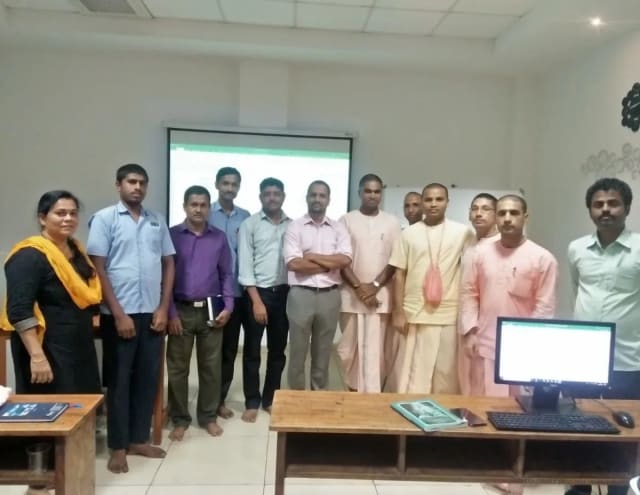
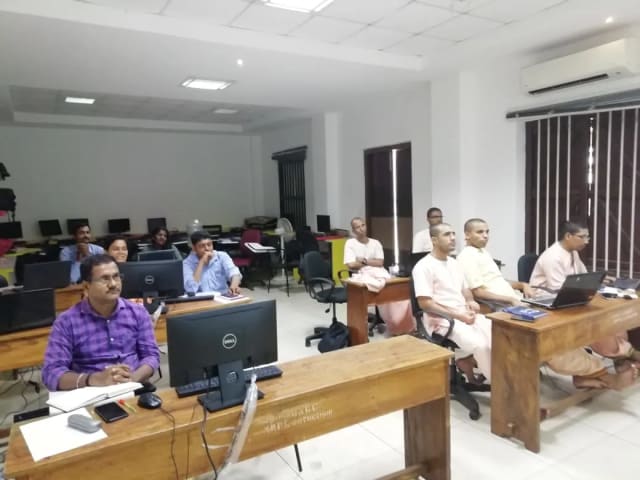


Technovids assigns a suitable trainer after the audience, subject depth and delivery needs are confirmed.
Co-founder & Lead Instructor, Technovids Consulting
Pankaj is a co-founder and the lead instructor at Technovids Consulting. His programme work spans practical AI adoption, AI engineering, evaluation, responsible production AI, data analytics and corporate learning design, with an emphasis on hands-on exercises connected to workplace tasks.
Expertise:
AI & Machine Learning Trainer, Strategist and Consultant
Junaid is an AI and machine-learning trainer, strategist and consultant with more than 22 years of training experience. His work combines enterprise AI education, business-centred adoption, responsible AI practices and applied solution design, helping professional audiences connect AI concepts to real organisational needs.
M.E. in Computer Engineering, specialising in Artificial Intelligence · author of programming books on Python, Java and C++
Expertise:
Technical Trainer & Curriculum Architect
Pradeep is a technical trainer and curriculum architect with more than 20 years of experience across enterprise technology, cloud infrastructure and advanced AI systems. He designs practitioner-focused programmes, labs and assessments covering AI, LLM systems, Python and machine learning, translating complex technical subjects into structured learning experiences.
Bachelor of Engineering in Electrical Engineering · instructor-led, virtual and blended delivery
Expertise:
The proposal names or confirms the trainer assignment for the engagement; every trainer shown here does not teach every programme.
Updated
Approved client relationships, participant feedback and real training photographs provide context on Technovids delivery. They do not guarantee a particular adoption or business result.




















Practical training programmes delivered for learners, professionals and teams across AI, data, cloud, productivity and professional skills.
What professionals found useful, practical and relevant to their day-to-day work.
Technovids AI training was very practical and well structured. The sessions helped me understand how AI concepts can be applied in real data engineering and business workflows, instead of only learning theory. The trainer explained the topics clearly with relevant examples, which made the learning experience valuable and easy to follow.
The AI training from Technovids helped me gain a better understanding of Generative AI, prompt engineering, and practical AI use cases for software development. The course was clear, interactive, and focused on real-world applications. It gave me confidence to explore AI tools more effectively in my work.
Technovids delivered the AI training in a very practical and industry-relevant way. As a data engineer, I found the examples and hands-on discussions useful for understanding how AI can improve data workflows, automation, and decision-making. The sessions were well planned and easy to understand.
The AI training program by Technovids was insightful and professionally delivered. It covered important AI concepts in a simple and practical manner, with examples that connected well with data and analytics use cases. The sessions helped me build a stronger foundation in applying AI in real business scenarios.
Technovids conducted the AI training in a very effective and engaging manner. The sessions were practical, easy to follow, and focused on how AI can be used in real software engineering and business workflows. It was a valuable program for understanding the current direction of AI adoption in the industry.
Technovids AI training was a very useful learning experience. The course explained AI concepts in a practical way and showed how developers can use AI tools to improve productivity, problem-solving, and application development. The trainer's approach was simple, clear, and focused on industry use cases.
Published answers define the page scope. A written proposal records engagement-specific terms.
No. It is independent Technovids training designed around the organisation’s Claude environment and current Anthropic documentation.
Current Enterprise plan terms can include Claude Code, but access, billing and legacy seat arrangements vary. Technovids confirms the client’s actual agreement and user roles before designing exercises.
Yes when relevant and approved. The training distinguishes administrator enablement, individual authentication, source permissions, tool actions and the separate security review required for custom or third-party MCP servers.
A shared adoption foundation can be useful, but practice should split. Business users need knowledge-work workflows; developers need repository, tool, test and review workflows.
Not by default. Training can include admin awareness and controlled demonstrations. Production configuration, connector rollout or managed-policy implementation requires explicit scope, access and change approval.
The course develops Claude user capability. This enterprise service adds organisational role mapping, connectors, engineering adoption, administration awareness, governance and rollout planning.
2nd Floor, Chandrodaya Complex, 19/19, 24th Main Rd, near Hanuman Temple, Agara Village, 1st Sector, HSR Layout, Bengaluru, Karnataka 560102.
Please contact us before visiting the head office. The HSR Layout address is a head office, not a walk-in public classroom.