
Live online cohort · For Python developers
AI Engineering Course for Developers Build Production AI Systems with RAG, AI Agents & MCP
Go beyond ChatGPT prompts and tutorial code. In eight weeks you will build RAG apps, controlled AI agents and MCP integrations — and finish with five GitHub projects with live demos you can explain with confidence.
- Programme
- 80 h · 8 weeks
- Live classes
- 40 h live
- Guided builds
- ~40 h guided builds
- Portfolio
- 5 GitHub projects
Training a team? See the private 40-hour corporate programme
What is the AI Engineering Course?
The Technovids AI Engineering Course is a live online cohort that teaches Python developers to build LLM applications — RAG systems, controlled agents, MCP integrations and deployable AI services. Over eight weeks you attend 40 hours of live, instructor-led classes and complete about 40 hours of guided project work between sessions, with trainer review at set checkpoints. You finish with five GitHub portfolio projects, each with a working hosted demo: four focused builds and an integrated capstone.
Is this course right for you?
Who it is for
- Python developers and software engineers moving into LLM applications
- Backend, full-stack and DevOps engineers adding AI to their skill set
- Data engineers, data scientists and ML engineers who want to ship LLM features
- Technical career switchers and founders who already write Python
- Final-year students who write Python confidently
Situations it fits
- You use AI tools every day but have not built an AI application yet
- You want a structured, live path instead of piecing together tutorials
- You want portfolio projects you can demo and explain in interviews
- You prefer learning with a cohort of developers and a weekly rhythm
Prerequisites
- Intermediate Python: functions, classes, lists and dictionaries, installing packages
- Calling a REST API from Python
- Basic command-line comfort
- About 10 hours a week for eight weeks — roughly 5 live and 5 build hours
- No machine-learning or data-science background needed
Which Technovids AI engineering route fits you?
Three programmes build AI engineering skills. They differ in who they are for and how you learn.
| Course | Best for | Choose it when |
|---|---|---|
| AI Engineering Course This course | Individual developers who want a live cohort | Choose this for structured, live learning with peers: 40 hours of classes and five guided portfolio builds over eight weeks. |
| 1:1 AI Engineering Mentorship | One learner, one mentor | Choose it for a three-month, one-to-one programme built around your own projects and schedule. |
| Production AI Engineering Training | Company engineering teams | Choose it when your employer wants private 40-hour training for its own team, run as five 8-hour or ten 4-hour days. |
| AI Programming with Python | Developers who need more Python first | Start here if you are not yet comfortable writing functions and classes and calling APIs in Python. |
Watch: what it takes to become an AI engineer
A 57-second preview of why building with LLMs takes more than chatbot prompts — and the skills this course is built around.
- Why chatbot building alone is not enough
- How RAG, agents, MCP and deployment fit together
- Whether the course matches your Python background

Stuck at the AI surface level?
Using ChatGPT every day is not the same as building with it. These are the walls most Python developers hit — and what you will practise to get past them.
“I use ChatGPT, but I can’t build an AI application”
Prompting a chat app and engineering an application are different skills.
What you will practise
From week 1 you call model APIs from Python and return validated, structured output — your first build.
“I know Python, but RAG pipelines are a black box”
Embeddings, chunking, vector search and re-ranking each involve trade-offs.
What you will practise
Build a RAG assistant step by step, then measure it and prove what made it better.
“There are too many frameworks — where do I start?”
LangChain, LlamaIndex, LangGraph, CrewAI, MCP… the list keeps growing.
What you will practise
Learn the patterns underneath, and when a framework genuinely helps rather than hides the problem.
“I can prototype, but I can’t ship it”
A notebook demo is not a service someone else can run.
What you will practise
Serve your work with FastAPI, package it with Docker, and add tracing and cost tracking.
“I want AI skills I can use at work now”
Toy demos rarely transfer to real codebases.
What you will practise
Every build uses patterns engineering teams rely on: structured outputs, evaluation, approval steps and least-privilege tools.
“I need portfolio projects, not just a certificate”
Interviewers ask what you built and why you built it that way.
What you will practise
Five documented projects on your GitHub, each reviewed against clear criteria — ready to demo and discuss.
Five projects you build, host and can explain
Not tutorial copies. Each build adds a real capability — from a reliable model API call to an integrated application — and ends with a working hosted demo you can show and explain.
- Build 1
LLM API service
Your first reliable AI backend
- Request
- Prompt
- Model API
- Schema check
- JSON response
Stack:
- Python
- OpenAI · Anthropic · Gemini APIs
- Structured outputs
You can show: How you keep model output reliable — schemas, retries and cost per call.
- Build 2
Evaluated RAG assistant
Answers grounded in documents — with proof
- Documents
- Chunk
- Embed
- Vector store
- Retrieve + re-rank
- Cited answer
Stack:
- LangChain or LlamaIndex
- ChromaDB or FAISS
- Evaluation set
You can show: Before-and-after evaluation results, and which change improved retrieval.
- Build 3
Controlled agent
Multi-step work with a human in the loop
- Plan
- Call tool
- Check
- Human approval
- Act
Stack:
- LangGraph
- Tool calling
- Human-in-the-loop
You can show: A walkthrough of one run: state, routing and where the agent stops for approval.
- Build 4
MCP integration
Connect AI to real tools and data
- MCP client
- MCP server
- Scoped tools
- Your data
Stack:
- Model Context Protocol
- Tool schemas
- Scoped access
You can show: A client discovering and calling your tools — and the access each tool has.
- Capstone
Integrated capstone
One AI application, end to end
- FastAPI
- RAG · agent · MCP
- Evaluation
- Tracing
- Docker
Stack:
- FastAPI
- Docker
- LangSmith or similar
- Your earlier builds
You can show: The architecture, evaluation results, limits and running cost of an application you designed — the conversation a technical interview is built around.
You publish all five demos using a host compatible with each project. An eligible free plan such as Vercel or Cloudflare may suit some builds; others may need your own AWS or Azure account on a free or paid tier. Hosting limits and prices vary, and continuing to host after the course is your choice and responsibility. Access-limited demos are suitable for agent and MCP projects; never publish credentials or unrestricted write tools.
See the briefs, checkpoints and acceptance criteriaWhat participants will be able to do
By the end, you should be able to build, evaluate and explain the main parts of an LLM application — and know where each part can fail.
Build an LLM API service
Call model APIs with structured outputs, error handling, retries and cost awareness.
Build a RAG pipeline
Ingest and chunk documents, embed them, retrieve relevant passages and cite sources.
Evaluate and improve retrieval
Measure quality with a test set and show whether a change helped.
Build a controlled agent
Model a workflow with explicit state, limited tools and a human-approval step.
Build an MCP integration
Expose tools through an MCP server with scoped access and connect a client.
Package an AI service
Serve an application with FastAPI and run it in Docker with configuration kept out of code.
Observe and test for risks
Trace runs, track cost and latency, and test for prompt injection.
Explain your design
Present the trade-offs and limits of your capstone with confidence.
Not a video course. A live cohort.
Every cohort is taught live by a Technovids trainer, with real Q&A, code walkthroughs and feedback on your own projects — alongside developers learning the same material.
Weekend or weekday-evening classes
About 5 hours of live, instructor-led teaching a week, with real-time Q&A and code walkthroughs.
Weekend and late-evening weekday schedules are offered; exact days and times are confirmed for each cohort.
Code and project review
Your trainer reviews your actual code at each project checkpoint, with specific, actionable feedback.
Reviews happen at defined checkpoints rather than on demand.
Guided project briefs
Clear written briefs and acceptance criteria, so you always know what to build next and what “done” means.
Technovids LMS
Find course notes, assignments and step-by-step lab instructions alongside your live Zoom classes.
Session recordings
Catch up on a missed live class or revisit a demonstration through the Technovids LMS.
Each class recording is uploaded to the LMS within 24 hours and remains accessible for three months.
Cohort group in the LMS
Use your cohort group in the Technovids LMS to ask questions and discuss work between sessions.
Trainer feedback comes through classes and checkpoints; group replies are not time-guaranteed.
Certificate of completion
Complete the programme and submit your five projects to receive a Technovids certificate with a unique ID that can be verified on our website.
You can add it to LinkedIn. It is not a government, university or vendor certification.
Free strategy call first
Chandan, our corporate L&D expert, starts with your background, goals and expectations; an AI subject-matter expert follows up when needed. No payment or obligation.
Career direction
Guidance on the roles your portfolio supports, such as AI engineer, LLM application developer or RAG engineer.
No job placement or salary outcome is promised.
80 hours: 40 live, about 40 building
Half of the programme is live teaching. The other half is guided project work you do between sessions, reviewed by your trainer at set checkpoints — so all 80 hours are not live classes.
40 h live classes40 h guided builds80 h over 8 weeks
Live instructor-led classes
About 5 hours a week for 8 weeks
- Taught live online by a Technovids trainer
- Concepts, live coding and design discussion
- Questions answered in class
- Each week introduces the pattern you build next
Guided project and lab work
About 5 hours a week, between live sessions
- Independent work on the week’s brief — not extra live classes
- Written briefs with acceptance criteria
- Reviewed by your trainer at defined checkpoints
- Four focused builds and one integrated capstone, each with a hosted demo
Planning model: 8 weeks × (5 live hours + 5 build hours) = 40 + 40 = 80 hours. Building, deployment and debugging time varies by learner and host; some need more than the estimated lab hours.
80 hours · 40 h live + 40 h guided lab
Detailed curriculum
Eight weeks, each with about 5 hours of live classes and about 5 hours of guided building: 40 + 40 = 80 hours. Each week’s build is shown under the week it belongs to.
Week 15 h live · 5 h lab LLM application foundations
- Calling OpenAI, Anthropic and Google model APIs
- Prompt patterns and structured (JSON) outputs
- Tokens, context windows and cost
- Errors, timeouts and retries
- Publishing a small demo endpoint with secrets kept off GitHub
Practical activityBuild 1: publish a working LLM API demo and submit its GitHub repository and demo link for the first checkpoint.
Week 25 h live · 5 h lab RAG foundations
- Embeddings and semantic search
- Chunking and document ingestion
- Vector stores such as ChromaDB or FAISS
- LangChain and LlamaIndex building blocks
Practical activityBuild 2, part 1: ingest documents and answer questions with citations.
Week 35 h live · 5 h lab RAG quality and evaluation
- Hybrid search and re-ranking
- Building an evaluation set
- Measuring retrieval and answer quality
- Reducing unsupported answers
Practical activityBuild 2, part 2: measure, improve and re-measure, then publish a hosted RAG demo and submit it for checkpoint review.
Week 45 h live · 5 h lab Controlled agents with LangGraph
- Graph state, nodes and conditional routing
- Tool calling with limits
- Human-approval steps
- Single- and multi-agent designs, including CrewAI
Practical activityBuild 3: publish a controlled, access-limited agent demo and submit it for checkpoint review.
Week 55 h live · 5 h lab Model Context Protocol
- MCP hosts, clients and servers
- Building an MCP server with tools
- Connecting a client
- Authentication and least-privilege tools
Practical activityBuild 4: host the MCP integration with scoped access and submit a working demo for checkpoint review.
Week 65 h live · 5 h lab Shipping an AI service
- Serving with FastAPI
- Packaging with Docker
- Configuration and secrets
- Deploying a container to a cloud platform
Practical activityCapstone, part 1: project plan and architecture, reviewed at the design checkpoint.
Week 75 h live · 5 h lab Evaluation, observability and cost
- Tracing with LangSmith or a similar tool
- Latency and cost tracking
- Guardrails and prompt-injection tests
- Regression checks
Practical activityCapstone, part 2: build and evaluate.
Week 85 h live · 5 h lab Capstone review and portfolio
- Final evaluation run
- Documentation and README
- Presenting design decisions
- Code review feedback
- Final hosted-demo checks and safe handover
Practical activityCapstone, part 3: deploy, test and present the live demo for final review alongside the four earlier hosted builds.
Not sure you are ready for week 1?
Book a free strategy call with Chandan to discuss your Python background and goals. An AI subject-matter expert can follow up when needed.
Project briefs, checkpoints and acceptance criteria
For serious evaluators: the detail behind the five builds. Each has a written brief, a review checkpoint and acceptance criteria, so you know what “done” means before you start.
| Project | Weeks | Estimated lab hours |
|---|---|---|
| LLM API service | Week 1 | 5 h |
| Evaluated RAG assistant | Weeks 2–3 | 10 h |
| Controlled agent | Week 4 | 5 h |
| MCP integration | Week 5 | 5 h |
| Integrated capstone | Weeks 6–8 | 15 h |
| Total guided lab time | 40 h |
Build 1 · Week 15 lab hours (estimate) LLM API service
A small Python service that takes a request, calls a model API and returns validated, structured output — with errors handled rather than ignored.
Acceptance criteria
- Returns output that validates against a defined schema
- Handles API errors and timeouts without crashing
- API keys are read from the environment, never committed
- README explains how to run it and what it costs to call
- A hosted demo endpoint works at the checkpoint and is linked from the README
Review checkpoint
Submitted at the end of week 1; reviewed at the first checkpoint.
Build 2 · Weeks 2–310 lab hours (estimate) Evaluated RAG assistant
A question-answering app over a set of public or self-authored documents that cites its sources — then measured and improved.
Acceptance criteria
- Answers cite the passages they rely on
- An evaluation set of at least 15 questions with expected answers
- A recorded baseline and at least one measured improvement
- Documents known failure cases
- A hosted demo answers a test question and is linked from the README
Review checkpoint
Submitted at the end of week 3 with before-and-after evaluation results.
Build 3 · Week 45 lab hours (estimate) Controlled agent
A LangGraph workflow that completes a multi-step task using a small set of tools, and pauses for approval before any action with side effects.
Acceptance criteria
- Explicit state and routing between steps
- Tools limited to what the task needs
- A human-approval step before side-effecting actions
- Stops cleanly on failure instead of looping
- An access-limited hosted demo shows the approval step without exposing unrestricted actions
Review checkpoint
Submitted at the end of week 4; reviewed with a walkthrough of one run.
Build 4 · Week 55 lab hours (estimate) MCP integration
An MCP server exposing two or three tools over data you control, connected to an MCP client.
Acceptance criteria
- A client can discover and call the server’s tools
- Read-only tools are separated from any write tool
- Inputs are validated and errors returned clearly
- Access is limited to the data the tools need
- A hosted, access-controlled integration demonstrates a client calling its tools
Review checkpoint
Submitted at the end of week 5; reviewed with a live tool call.
Capstone · Weeks 6–815 lab hours (estimate) Integrated capstone
One application that combines at least two earlier builds — for example RAG with an agent, or an agent with MCP tools — served through FastAPI, evaluated and documented.
Acceptance criteria
- Runs with Docker using documented steps
- Includes an evaluation run and the results
- Includes a prompt-injection test and how it is handled
- README covers the architecture, limits and running cost
- A hosted capstone demo works at final review and its deployment steps are documented
Review checkpoint
Design reviewed in week 6; final build reviewed in week 8 with a short presentation of design decisions.
Hours are planning estimates; hosting and debugging can take longer than the guided lab allocation. The five hosted builds are portfolio demos, not certified production systems or a promise of indefinite hosting. Trainer support comes through live classes and checkpoint reviews.
Habits practised in every project
Good AI engineering is as much about what you prevent as what you build. These habits are part of every brief and checkpoint.
Links point to official security and hosting sources; specifications, free tiers and prices can change, so check the current terms before use.
Keep keys and secrets out of code
API keys and credentials live in environment variables or a secrets store, never in a repository.
Use only data you are allowed to use
Build with public, synthetic or self-authored data. Do not use an employer’s confidential material in course projects.
Treat retrieved text and tool output as untrusted
Documents and tool results can carry instructions of their own. Keep them separate from your instructions and validate what the model returns.
Give tools the least access they need
Start read-only, keep write tools separate and scope credentials narrowly — especially in MCP servers.
Measure before claiming quality
A change is only an improvement if the evaluation results say so.
Watch API usage and cost
If a project needs a paid model API, you use your own account and pay the provider for your actual usage. Track calls and set a spending limit before testing a hosted demo.
Choose a suitable demo host
A free hosting plan may work for a small demo, but each project has different runtime and storage needs. Check plan limits before deploying; paid hosting is not included in the course fee, so agree the deployment route and possible costs before enrolling.
From free call to finished capstone
From your first conversation to your first live class, here is what happens.
From free call to your first class
Book a free strategy call
Tell Chandan, our corporate L&D expert, about your Python experience and goals. No company details or payment needed.
Get honest fit advice
Chandan helps set expectations and brings in an AI subject-matter expert when your questions need deeper technical input. We discuss whether this cohort or another route fits.
Receive the cohort details
The next cohort’s dates, session times, fee and what is included are shared with you in writing.
Set up before week 1
Prepare a computer that runs Python and Docker, choose a suitable demo host, and arrange your own model API account if the selected labs require one.
Learn live, build between sessions
Attend the live classes and complete each week’s build brief at your own pace.
Get your work reviewed
Your trainer reviews each build against its acceptance criteria and gives specific feedback.
How each week runs
Live online classes — about 5 hours
Best for: Learning concepts and asking questions live
Instructor-led sessions with live coding and Q&A, scheduled to suit working professionals.
Guided building — about 5 hours
Best for: Building and debugging at your own pace
Independent work on the week’s project brief between live sessions — not extra live instruction.
Checkpoint reviews
Best for: Getting specific feedback on your work
Each build is reviewed against its acceptance criteria at a defined point in the course.
Planning model: (5 live hours + 5 build hours) × 8 weeks = 80 hours. Build time is an estimate and depends on your experience.
Inside our instructor‑led training sessions
Photos from Technovids instructor-led sessions across its programmes.

Photo 1 of 10: Hands-on session 
Photo 2 of 10: Group photo 
Photo 3 of 10: Hands-on session 
Photo 4 of 10: Group photo 
Photo 5 of 10: Classroom session 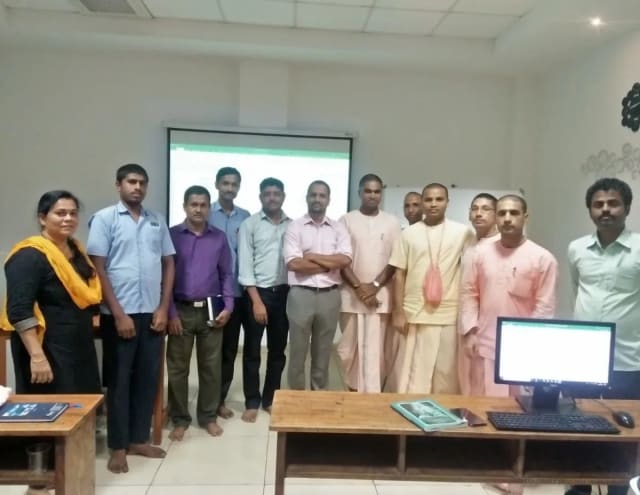
Photo 6 of 10: Group photo 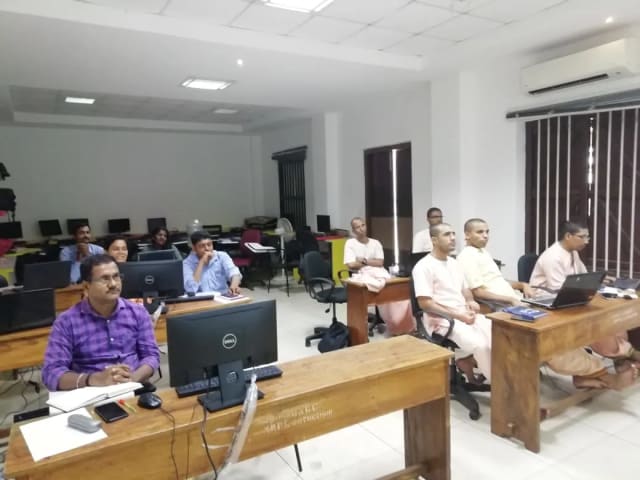
Photo 7 of 10: Computer-lab session 
Photo 8 of 10: Group photo 
Photo 9 of 10: Classroom session 
Photo 10 of 10: Group photo
Course details at a glance
Everything in one place, including how the 80 hours are made up.
Ask about dates and fees| Course | AI Engineering Course |
|---|---|
| Audience | Individual developers joining a public cohort |
| Level | Intermediate — working Python required; no machine-learning background needed |
| Total duration | 80 hours over 8 weeks |
| Live instruction | 40 hours, live online — about 5 hours a week |
| Guided project work | About 40 hours between sessions — about 5 hours a week, estimated — reviewed at trainer checkpoints |
| Projects | Five GitHub portfolio projects with working hosted demos: four focused builds and an integrated capstone |
| Delivery | Live online public cohort through Zoom |
| Session days and times | Weekend or weekday late-evening options; exact timetable confirmed for each cohort |
| Language | English |
| Next cohort and fee | Shared on your free strategy call or by email |
| Recordings | Uploaded to the Technovids LMS within 24 hours of each class; accessible for three months |
| LMS resources | Course notes, assignments and lab instructions |
| Support | Live Q&A, checkpoint code reviews and a cohort group in the Technovids LMS |
| Certificate | Technovids certificate of completion with a unique website-verifiable ID after completing the programme and submitting all five projects |
| Model API usage | If a lab needs a paid model API, learners use their own account and pay the provider according to actual usage |
| Demo hosting | Learner-hosted; eligible free tiers may suit some builds, or use your own AWS/Azure free or paid tier |
| Career outcomes | Career direction included; no job placement or salary outcome is promised |
Meet the trainer panel
Each public cohort is led by one trainer from the Technovids panel, who teaches the live classes and reviews your projects. The panel does not all teach every session.
Pankaj Rana
Co-founder & Lead Instructor, Technovids Consulting
Pankaj is a co-founder and the lead instructor at Technovids Consulting. His programme work spans practical AI adoption, AI engineering, evaluation, responsible production AI, data analytics and corporate learning design, with an emphasis on hands-on exercises connected to workplace tasks.
Expertise:
- Practical AI adoption
- Prompting and evaluation
- Responsible AI
- Corporate learning design
Junaid Khateeb
AI & Machine Learning Trainer, Strategist and Consultant
Junaid is an AI and machine-learning trainer, strategist and consultant with more than 22 years of training experience. His work combines enterprise AI education, business-centred adoption, responsible AI practices and applied solution design, helping professional audiences connect AI concepts to real organisational needs.
M.E. in Computer Engineering, specialising in Artificial Intelligence · author of programming books on Python, Java and C++
Expertise:
- Enterprise AI and ML training
- AI strategy and adoption
- Responsible AI
- Applied AI solution design
Pradeep Varadarajan
Technical Trainer & Curriculum Architect
Pradeep is a technical trainer and curriculum architect with more than 20 years of experience across enterprise technology, cloud infrastructure and advanced AI systems. He designs practitioner-focused programmes, labs and assessments covering AI, LLM systems, Python and machine learning, translating complex technical subjects into structured learning experiences.
Bachelor of Engineering in Electrical Engineering · instructor-led, virtual and blended delivery
Expertise:
- AI and LLM systems
- Curriculum architecture
- Python and machine learning
- Hands-on lab design
Your cohort’s lead trainer is named in the cohort details you receive before enrolling.
Updated
Technovids training in practice
Organisations Technovids has trained, plus approved feedback from learners across its AI programmes. Their experiences are individual accounts, not a promise of results from this particular cohort.
Organisations we have delivered training for

















Practical training programmes delivered for learners, professionals and teams across AI, data, cloud, productivity and professional skills.
What learners say about Technovids AI training
First-hand feedback from developers, data professionals and technical leaders across Technovids programmes.
- Rahul DesaiSenior Software Engineer
I had been trying to transition from traditional backend development to Generative AI, but self-learning was getting overwhelming. The AI Engineering course at Technovids gave me the exact structured roadmap I needed. The modules on LLM architectures and practical prompt engineering are brilliant. It’s not just theory; you actually build functional AI applications. Highly recommend this for working professionals looking to upgrade their tech stack.
- Priya NatarajanData Scientist
Finding a course that goes deep into Retrieval-Augmented Generation (RAG) is surprisingly hard. Most just scratch the surface. Technovids delivered an incredibly detailed deep dive into RAG pipelines, LangChain, and LlamaIndex. The hands-on projects helped me understand how to manage vector databases and chunking strategies effectively. It’s easily the most practical Generative AI training I’ve taken.
- Amit SharmaTechnical Lead
If you want to understand agentic AI, this is the course to take. The instructor did a fantastic job breaking down complex topics like LangGraph and cyclical agents, which are rarely covered well in other bootcamps. Learning how to orchestrate multiple AI agents to solve complex workflows has completely changed how I approach architecture at my current job. Worth every penny.
- Sneha ReddyFull Stack Developer
What I loved most about the Technovids GenAI program is how up-to-date the curriculum is. Instead of outdated practices, we learned to integrate the Model Context Protocol (MCP) and practically apply tools like Claude and Cursor for AI-assisted coding. It felt like I was learning the exact skills that top tech companies are hiring for right now. The pace is perfect, and the support is great.
- Vikram IyerEngineering Manager
As a manager, I needed a strong conceptual and practical grasp of Generative AI to guide my team's projects. This course bridged that gap perfectly. It provides a crystal-clear understanding of LLM capabilities, implementation costs, and real-world deployment challenges. The mastermind approach they use makes it an excellent AI engineering course for seasoned professionals wanting to stay ahead of the curve.
- Neha GuptaBackend Developer
I was initially intimidated by the math and complexity behind AI, but the trainers at Technovids explain things in such an accessible way. They break down everything from basic prompt engineering to complex integrations without losing you in the jargon. The session recordings and project materials are top-notch. If you are serious about becoming an AI Engineer, Technovids provides the perfect launchpad.
- Rohan ChatterjeeProduct Manager (AI/ML)
I took the Technovids AI training to better understand the technical side of the AI products I manage. The hands-on exposure to creating AI agents and working with LLMs gave me exactly the context I was missing. It’s incredibly practical. I was able to take the frameworks we learned on the weekend and immediately start applying them to our product roadmap on Monday.
- Anjali VermaSystems Analyst
I didn't want a purely academic course; I wanted to code. Technovids pushes you to actually build things. The curriculum is heavily focused on real-world use cases, ensuring you know how to build robust, scalable applications using LangChain and advanced AI models. It’s intensive, fast-paced, and exactly what the current job market demands.
Questions developers ask before joining
Straight answers about the course, the projects and how the cohort works. Dates and fees for the next cohort are shared on your free call or by email.
What is an AI engineering course?
An AI engineering course teaches developers to build software applications on large language models — using APIs, retrieval-augmented generation, agents, evaluation and deployment practices. It focuses on building and testing applications rather than on general AI awareness or model training.
Who is this course for?
Individual developers joining a public cohort: Python developers, software engineers, backend and full-stack developers, data and ML engineers, technical career switchers, founders and final-year students who write Python confidently. Teams trained by their employer should see Production AI Engineering Training.
How are the 80 hours made up?
40 hours of live instructor-led online classes plus about 40 hours of guided project work completed between sessions. The planning model is eight weeks of about 5 live hours and 5 build hours a week: 8 × (5 + 5) = 80.
Is all of that live teaching?
No. The 40 live hours are classes with your trainer. The other 40 hours are independent project work on written briefs, done between sessions and reviewed by your trainer at defined checkpoints.
When are the live classes held?
Live-online cohorts are scheduled for weekends or late evenings on weekdays to suit working professionals. The exact days and times are confirmed for each cohort and shared before enrolment.
How much time do I need each week?
Plan for about 10 hours a week: roughly 5 hours of live classes and 5 hours of building. Build time is an estimate — depending on your experience you may need more or less.
Can I speak to someone before joining?
Yes. Book a free AI career strategy call. Chandan, our corporate L&D expert, starts by discussing your background, goals and expectations. An AI subject-matter expert follows up when you need deeper technical guidance. We will help you judge whether this course, 1:1 mentorship or AI Programming with Python fits. No payment or obligation.
What are the fees, and when does the next cohort start?
Fees and dates can vary by cohort, so they are shared on your free strategy call or by email rather than published here. Use the form on this page to ask.
Do I need Python before joining?
Yes. You should be able to write functions and classes, work with lists and dictionaries, install packages and call a REST API in Python. No machine-learning background is needed. If you are new to Python, start with AI Programming with Python.
What projects will I build?
Four focused builds — an LLM API service, an evaluated RAG assistant, a controlled agent and an MCP integration — and an integrated capstone. All five live in your GitHub portfolio and have a working hosted demo for review. Agent and MCP demos can be access-limited for safety. Each build is reviewed against written acceptance criteria.
Will my projects be deployed?
Yes. The course briefs include a hosted demo for each of the five projects, working at its review checkpoint. The capstone is also containerised with Docker. You deploy through a compatible host: an eligible free plan such as Vercel or Cloudflare where appropriate, or your own AWS or Azure account on a free or paid tier. Hosting after the course depends on the provider plan and your choice; we do not promise permanent hosting.
Are hosting or model API fees included?
The course includes deployment guidance, not a paid cloud account or model API credits. Some demos may fit an eligible free hosting tier, but compatibility, limits and fees vary by provider. If a project needs a paid model API, you use your own account and pay that provider for your actual usage. We identify the required accounts and possible costs before you enrol.
Do I get code review?
Yes. Your trainer reviews your code at each project checkpoint and gives specific feedback. Reviews happen at those checkpoints rather than on demand.
Are sessions recorded?
Yes. Each live Zoom class recording is uploaded to the Technovids LMS within 24 hours. Learners have three months of access for catch-up and revision.
What is included in the Technovids LMS?
Your cohort includes course notes, assignments, lab instructions and a cohort discussion group in the Technovids LMS. Each class recording is uploaded within 24 hours and available for three months. When you meet the course completion requirements, your Technovids certificate carries a unique ID for website verification.
What support is there between sessions?
Your cohort has a group in the Technovids LMS for questions and peer discussion between sessions, alongside live Q&A in class and feedback at every project checkpoint. The course does not include unlimited one-to-one access or a guaranteed group-response time.
Is there a certificate?
Yes. Complete the programme and submit your five projects to receive a Technovids certificate of completion with a unique ID that can be checked on our website. You can add the certificate to LinkedIn. It is not a government, university or vendor certification; your GitHub portfolio and hosted demos are also evidence of what you built.
Do I need paid model API access?
Only if a selected lab needs a paid model API. In that case you create or use your own provider account and pay for the calls you make. Charges vary with your chosen model and actual usage; we explain the required access before enrolment and teach you to monitor usage.
What roles can this help me pursue?
Roles such as AI engineer, LLM application developer, generative AI developer, RAG engineer and AI automation engineer. Outcomes depend on your experience, portfolio and interviews; the course does not include job placement or promise a salary.
How is this different from Production AI Engineering Training?
Production AI Engineering Training is a private 40-hour corporate programme for one company’s engineering team, run onsite as five 8-hour days or ten 4-hour days, or privately online. This course is an 80-hour public cohort for individuals.
How is this different from the 1:1 AI Engineering Mentorship?
This course follows a set curriculum with a cohort on a shared schedule. The mentorship is a three-month, one-to-one programme built around your own projects.
Who teaches the course?
Each cohort is led by one trainer from the Technovids panel, who teaches the live classes and reviews your projects. Your lead trainer is named in the cohort details.
Ready to move from AI user to AI engineer?
Book a free strategy call. Chandan, our corporate L&D expert, will discuss your background, goals and expectations first. An AI subject-matter expert follows up when needed; we will also share the next cohort’s dates and fee.