
Direct SDK or framework?
Compare the same bounded feature using provider SDKs and LangChain abstractions before accepting an extra dependency.
Corporate AI training · Onsite & live online
Based in Bengaluru · delivering across India
Live-online framework training · Technovids Bengaluru
Build and evaluate maintainable LLM applications with current LangChain patterns—then know when direct SDKs, LangGraph or another approach is the better choice.
LangChain Training Bangalore is developer training from Technovids, headquartered in HSR Layout, Bengaluru. It covers current LangChain application patterns, model and tool interfaces, structured output, retrieval, agents, LangGraph handoff, testing and observability. The course teaches framework decisions rather than memorising one version’s API. Public cohort availability, dates and fees are confirmed before enrolment and classes run live online; private team delivery can be scoped separately.
Updated
Scope boundary: The course does not promise that LangChain is required for every LLM application or that a lab is production-ready. The current versions, primary provider, accounts and exercises are confirmed for each delivery.
Framework value depends on composition, portability, observability and the complexity it removes or introduces.
Compare the same bounded feature using provider SDKs and LangChain abstractions before accepting an extra dependency.
Use higher-level agents for common patterns and LangGraph when state, control flow or custom orchestration requires it.
Identify model, embedding, store, tool and evaluation boundaries that may change independently.
Pin versions, keep representative tests and review release notes before changing framework packages.
Labs focus on the boundary between framework convenience and application responsibility.
Call an approved model through a current integration and validate a typed response.
Assemble system instruction, user input, retrieved context and runtime constraints.
Load safe documents, split, embed, retrieve and answer with source support.
Expose a bounded tool and inspect the model’s decision to call it.
Move a workflow to explicit state and branching when higher-level control is needed.
Create test cases and inspect model, retrieval and tool behaviour across runs.
LangChain is one layer in a broader AI application stack.
This page
Learn current abstractions, retrieval, agents, LangGraph handoff and evaluation.
Best for: Python developers who already understand APIs and LLM basics
Go deeper into data ingestion, retrieval, reranking, grounded answers and evaluation.
Best for: Teams building knowledge and document applications
Go deeper into tools, state, multi-step workflows and human approval.
Best for: Developers building controlled agents
Connect LangChain with APIs, RAG, agents, MCP, deployment and operations.
Best for: Developers needing an end-to-end engineering programme
These are complementary options, not a universal maturity ladder.
| Decision point | Higher-level LangChain patterns | Direct SDK or LangGraph control |
|---|---|---|
| Best when | Common model, retrieval and agent patterns fit the task | The feature is simple or control flow is highly specific |
| Advantage | Composable interfaces and ecosystem integrations | Fewer abstractions or explicit state and orchestration |
| Risk | Dependency churn and hidden behaviour | More application code and engineering ownership |
| Decision evidence | Maintainability and testability in the actual use case | Maintainability and testability in the actual use case |
The goal is maintainable application reasoning, not framework name recognition.
Explain what LangChain adds and where the application retains responsibility.
Model, context, retrieval or tool behaviour can be inspected independently.
Dependencies are pinned and changes are checked against representative tests.
Security, data, reliability, observability, cost and deployment gaps are visible.
The route is confirmed before delivery so participants practise at the right technical level and do not confuse a tutorial demo with production readiness.
Confirm whether the need is a public learning route, a private team workshop or a broader engineering programme.
Agree programming level, accounts, model access, practice data, repository and any security restrictions.
Dates, duration, topics, exercises, delivery mode, fees and inclusions are stated before booking.
Short explanations lead into implementation, evaluation, debugging and instructor feedback.
Participants leave with reviewed artefacts, known limitations and a route for further practice or implementation.
The selected delivery confirms which implementation and review artefacts are included.
Use case, alternatives, selected abstractions and portability boundaries.
A bounded model, retrieval or tool-enabled workflow in a practice environment.
Expected, difficult and failure cases for the implemented workflow.
Version, evaluation, security, data, observability and deployment questions.
The practical work keeps access, evaluation, failure handling and human authority visible.
Labs use authorised model access, safe documents and practice integrations; credentials and private data never belong in prompts or source control.
A successful demo is tested against expected, difficult and failure cases before anyone calls it reliable.
Permissions, validation, timeouts, budgets and approval gates limit what an agent or integration may do.
A qualified person reviews sources, outputs, tool calls and material actions before release or use.
The course checks first-party documentation and pins lab versions before delivery.
Real instructor-led sessions from the Technovids delivery archive. The photographs show delivery context; they do not imply a result for a future cohort.


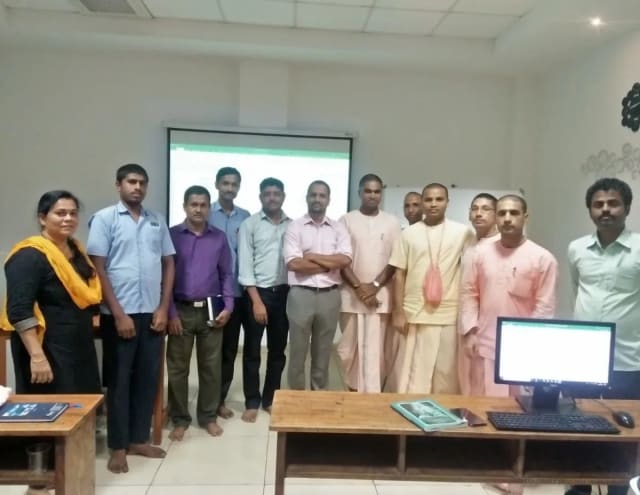
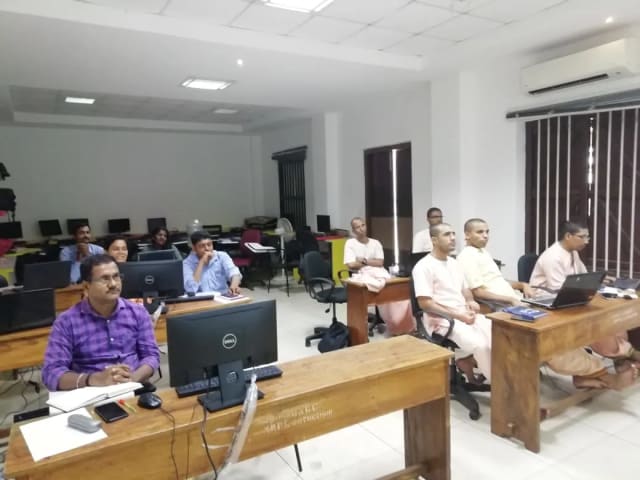


Technovids assigns a suitable trainer after the audience, subject depth and delivery needs are confirmed.
Co-founder & Lead Instructor, Technovids Consulting
Pankaj is a co-founder and the lead instructor at Technovids Consulting. His programme work spans practical AI adoption, AI engineering, evaluation, responsible production AI, data analytics and corporate learning design, with an emphasis on hands-on exercises connected to workplace tasks.
Expertise:
AI & Machine Learning Trainer, Strategist and Consultant
Junaid is an AI and machine-learning trainer, strategist and consultant with more than 22 years of training experience. His work combines enterprise AI education, business-centred adoption, responsible AI practices and applied solution design, helping professional audiences connect AI concepts to real organisational needs.
M.E. in Computer Engineering, specialising in Artificial Intelligence · author of programming books on Python, Java and C++
Expertise:
Technical Trainer & Curriculum Architect
Pradeep is a technical trainer and curriculum architect with more than 20 years of experience across enterprise technology, cloud infrastructure and advanced AI systems. He designs practitioner-focused programmes, labs and assessments covering AI, LLM systems, Python and machine learning, translating complex technical subjects into structured learning experiences.
Bachelor of Engineering in Electrical Engineering · instructor-led, virtual and blended delivery
Expertise:
The proposal names or confirms the trainer assignment for the engagement; every trainer shown here does not teach every programme.
Updated
Approved feedback and delivery photographs show wider Technovids training experience. They are not presented as guaranteed outcomes from this specific course.


















Practical training programmes delivered for learners, professionals and teams across AI, data, cloud, productivity and professional skills.
What professionals found useful, practical and relevant to their day-to-day work.
The AI training from Technovids helped me gain a better understanding of Generative AI, prompt engineering, and practical AI use cases for software development. The course was clear, interactive, and focused on real-world applications. It gave me confidence to explore AI tools more effectively in my work.
Technovids conducted the AI training in a very effective and engaging manner. The sessions were practical, easy to follow, and focused on how AI can be used in real software engineering and business workflows. It was a valuable program for understanding the current direction of AI adoption in the industry.
The AI training delivered by Technovids was practical, structured, and relevant for software professionals. The sessions connected AI concepts with real industry use cases, making it easier to understand how AI can be applied in development, automation, and productivity improvement. It was a valuable learning experience.
I had been trying to transition from traditional backend development to Generative AI, but self-learning was getting overwhelming. The AI Engineering course at Technovids gave me the exact structured roadmap I needed. The modules on LLM architectures and practical prompt engineering are brilliant. It’s not just theory; you actually build functional AI applications. Highly recommend this for working professionals looking to upgrade their tech stack.
What I loved most about the Technovids GenAI program is how up-to-date the curriculum is. Instead of outdated practices, we learned to integrate the Model Context Protocol (MCP) and practically apply tools like Claude and Cursor for AI-assisted coding. It felt like I was learning the exact skills that top tech companies are hiring for right now. The pace is perfect, and the support is great.
I was initially intimidated by the math and complexity behind AI, but the trainers at Technovids explain things in such an accessible way. They break down everything from basic prompt engineering to complex integrations without losing you in the jargon. The session recordings and project materials are top-notch. If you are serious about becoming an AI Engineer, Technovids provides the perfect launchpad.
Published answers define the page scope. A written proposal records engagement-specific terms.
The standard LangChain training runs 15 hours, delivered live online. A private team version can be shortened or extended, and the written proposal confirms its final duration.
Working Python, APIs and basic LLM concepts are recommended. Participants should be comfortable installing packages, reading errors and changing a small application.
Yes, where explicit state and orchestration add value. The delivery confirms whether LangGraph is an introduction, a comparison or a hands-on module.
The proposal or cohort information identifies the approved primary stack. Concepts are taught portably, but hands-on depth depends on accounts, licences, current integrations and available hours.
No. HSR Layout is the Technovids head office. When a public cohort is scheduled, classes run live online through Zoom. The Technovids LMS includes notes, assignments, lab instructions, a cohort discussion group, a completion certificate when requirements are met and recordings uploaded within 24 hours with three months of access.
No date or fee is assumed on this page. Enquire for the next confirmed option, complete timetable, prerequisites, inclusions and fee.
Yes. Private training can be adapted to the team’s use case, stack and access rules, delivered live online or onsite at the client’s workplace when agreed.
2nd Floor, Chandrodaya Complex, 19/19, 24th Main Rd, near Hanuman Temple, Agara Village, 1st Sector, HSR Layout, Bengaluru, Karnataka 560102.
Please contact us before visiting the head office. The HSR Layout address is a head office, not a walk-in public classroom.